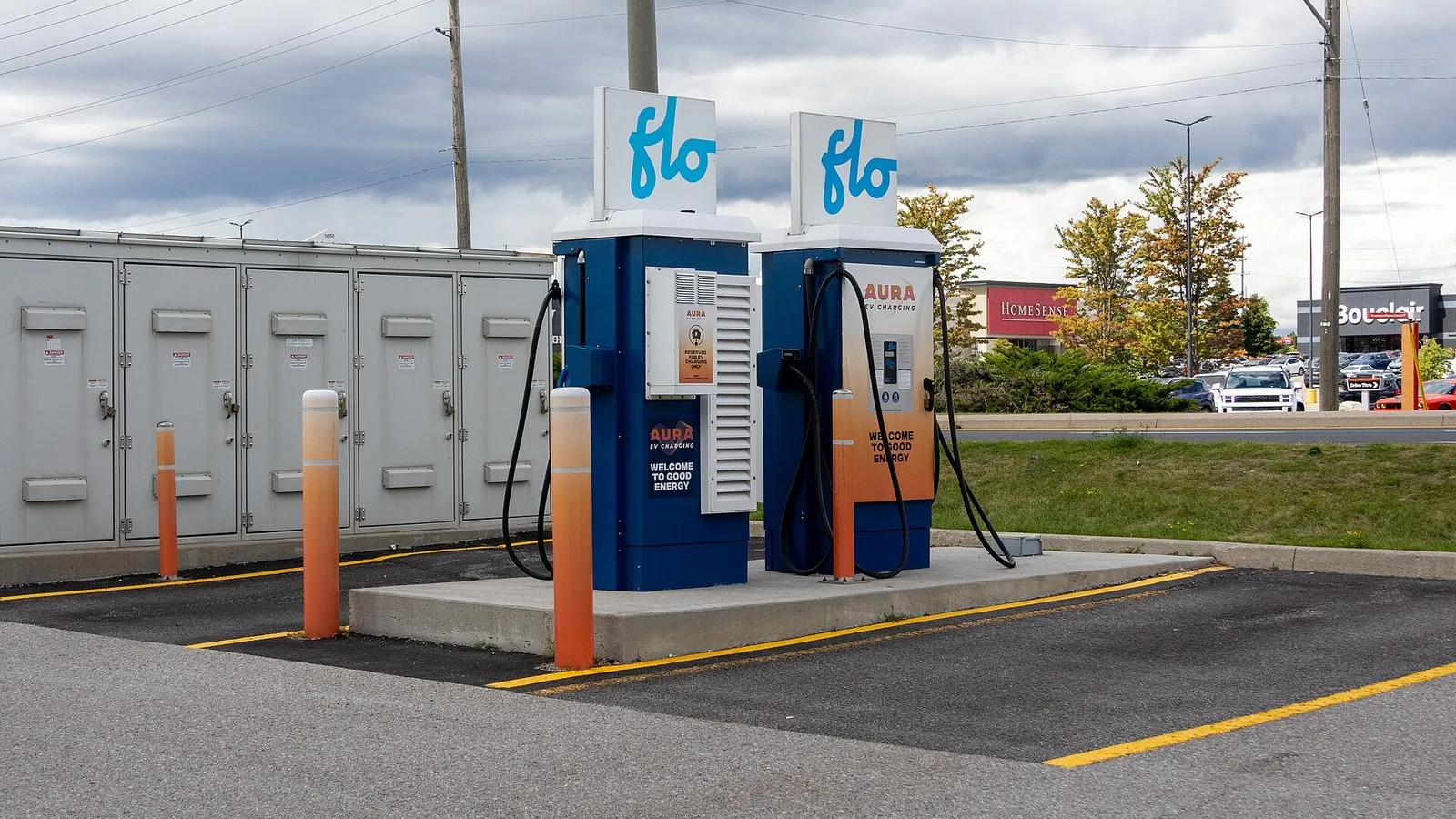
Transport Canada has posted guidance for automakers on the charging port, which it calls the charging inlet, on electric vehicles built for the Canadian market. The page, last modified November 6, 2026, recommends that the native charging inlet on light-duty passenger vehicles line up with the North American family of standards and work with the chargers Canadians already use. Transport Canada says: "This Guidance is non-binding and voluntary" (Transport Canada).
What did Transport Canada publish?
The document is called Canada’s Guidance on Electric Vehicle Charging Connector and Inlet Compatibility, and it's linked from Transport Canada's electric vehicles page as "Guidance on electric vehicle (EV) charging inlets". The page shows a date modified of November 6, 2026. It says it is "intended to help manufacturers producing electric vehicles (EVs) for the Canadian market make informed decisions about the charging inlet used on their light-duty passenger vehicles" (Transport Canada).
Transport Canada explains why it's guidance and not a rule: "In Canada, the design and use of specific EV charging connectors and inlets are not subject to Government of Canada regulations and are instead based on industry standards and the commercial decisions made by each vehicle manufacturer or original equipment manufacturer (OEM) in response to market trends and demand." The page says the guidance was developed "in consultation with stakeholders in the automotive industry" but doesn't name them.
Transport Canada: "EVs produced for the Canadian market should be equipped with a native charging inlet that aligns with the prevailing recognized North American EV industry standard(s) and charging infrastructure."
Which charging ports does it recommend?
The key line: "EVs produced for the Canadian market should be equipped with a native charging inlet that aligns with the prevailing recognized North American EV industry standard(s) and charging infrastructure." The other three recommendations are that charging inlets should work with the existing charging infrastructure, that inlet choices should ease the move to new charging technology while still working with older standards, and that automakers should give buyers education and resources.
The page describes SAE J3400 as "also known as the North American Charging Standard, or NACS" and says it is "one of two predominant options for DC fast charging (Level 3)". The other is CCS1. It says "the industry is transitioning toward SAE J3400/NACS for both Level 2 and Level 3 charging", while SAE J1772 "remains the dominant standard". It adds that CHAdeMO "is being phased out in North America", and that as new standards arrive, automakers should keep new inlets, connectors and adapters safely compatible with older ones "for as long as possible".
Which ports does it advise against?
Transport Canada writes: "The use of non-North American connector and inlet standards is not recommended (e.g., Type 2, CCS2, GB/T, etc.), as these could fragment the existing EV charging ecosystem, create interoperability issues and confusion, and become a source of friction between Canadian consumers and vehicle manufacturers." Elsewhere the page explains that Europe uses Type 2 and CCS2, and that China uses its own GB/T standard with separate AC and DC ports, none of which are compatible with Canada's charging infrastructure.
What does it say about adapters?
The page warns that an adapter that hasn't been approved or provided by the automaker, or isn't certified to ANSI/CAN/UL 2252:2025, "can lead to equipment failure, electrical faults, property damage, and risks to human safety." If an adapter is needed, automakers should make clear that the only ones allowed are those they supply and/or those certified to that standard. The guidance also says automakers shouldn't rely on adapters in place of a compatible built-in port, and should discourage universal AC/DC adapters.
What about Canadian winters, labels and dealers?
Noting that many parts of Canada regularly reach -40°C and some get as cold as -50°C or colder, the guidance says "EV manufacturers should strive for -40°C test and performance ratings." It also says: "It is strongly recommended that manufacturers provide labeling and user information on the vehicle that clearly identifies the inlet type and the AC/DC capability to prevent misuse."
The guidance says automakers and dealers "should provide clear and targeted information to consumers at the point of sale", including how to match a vehicle to a charging station, how to spot recognized safety certification marks and which equipment is safe to use. It says this material should use plain language.
Is any of this mandatory?
No. The page says the guidance "does not create, modify or interpret any requirement under the Motor Vehicle Safety Act, the Motor Vehicle Safety Regulations, or any Canada Motor Vehicle Safety Standard". It also says the guidance "should not be construed as enforceable federal regulations or mandatory requirements." It "was developed for light-duty passenger vehicles only and does not apply to other vehicle types (i.e., medium and heavy-duty vehicles)." It covers the physical fit between the charger and the car's port, not charging software or communication protocols.
What we don't know yet
The guidance sets no deadlines or model years, and it doesn't name any automaker or say how Transport Canada will track whether manufacturers follow it. For more on charging at home and on the road, see our charging guide.